Skematic is the only modern financial services compliance software platform built by people who ran compliance programs themselves. Brian Kesselman, a Skematic founder, spent years running personal trading compliance before he built software for it. As a compliance officer at a hedge fund, he reconciled employee trades against brokerage statements by hand, with no system underneath him.
Personal trade surveillance appears straightforward from the outside. Flag the suspicious trades, check the holding periods, catch the front-running. Anyone who has run a personal trading program under Advisers Act Rule 204A-1 knows how much sits behind those three sentences.
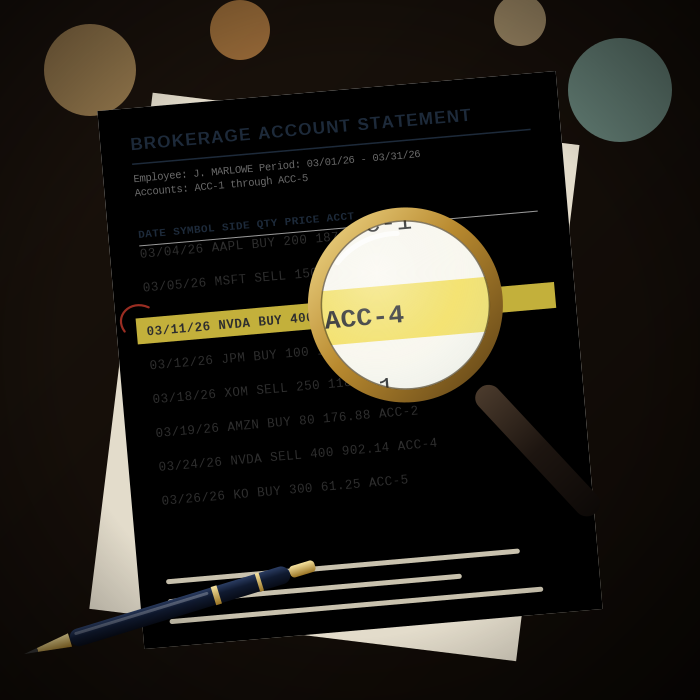
Brian learned it in the compliance seat rather than from a product requirements document. The statements arrived in inconsistent formats and had to be worked through line by line. He chased down accounts employees had opened and not disclosed. He matched holdings against a restricted list with nothing to check his work against, on a quarterly cycle that never moved regardless of what else was happening that month. Only afterward did he move to the vendor side, working in communications surveillance at Smarsh and then on enterprise deployments at ComplySci.
That sequence is unusual, and it is becoming more so. The newest “AI-native” entrants in RegTech are staffed by strong engineers and product people who build software well, and several have raised significant venture funding on that strength. What almost none of them have done is run a complex personal trading program. They are building compliance software for the first time, learning the category from customer interviews and regulatory text, and encountering the edge cases while clients are live on the platform. That learning is real, and it happens on the customer’s schedule.
Where Surveillance Engines Break
Comparing a single trade against a restricted list is a simple engineering problem. Any competent team can build it. The difficulty begins at the edges, and the edges are where compliance programs actually live.
Tracking a 60-day holding period for an employee with five accounts across three brokers requires deciding which lots a sale is matched against, and an engine that anchors to the most recent purchase will reject legitimate sales while approving ones it should question. Identifying a pattern of excessive trading requires looking across hundreds of accounts over months, which no reviewer working from monthly statements will do reliably. Neither problem is visible in the rule text. Both become visible when an SEC examiner asks how a violation was identified and the answer has to hold up.
Brian was the person giving that answer. He watched holding-period logic fall apart the first time it met a real account structure. He watched a name-matching feature flag an employee who had done nothing wrong, and watched that employee’s confidence in the entire compliance program erode afterward. He spent years as the human reviewer a surveillance system is supposed to outperform, which is a specific kind of knowledge: not that manual review misses things, but exactly which things it misses and under what conditions.
That is what shaped Skematic’s trade surveillance engine. Rules were designed around the account structures firms actually have rather than the ones that make the logic simple. Broker feed reliability was treated as a core requirement instead of an integration detail, because a feed that drops silently produces a surveillance program that appears to be working while it is not. False-positive rates were treated as a design constraint rather than a tuning exercise, since an alert queue full of noise teaches compliance officers to dismiss alerts, and a program whose alerts are routinely dismissed has failed regardless of what its coverage report says.
What to Ask When Evaluating Trade Surveillance Software
Most evaluations begin with a feature checklist. Holding periods, restricted securities, broker connectivity, and preclearance workflows. Those are reasonable questions, and every serious vendor answers them the same way.
The question that separates vendors is harder to put on a scorecard: has anyone responsible for this product ever run a complex personal trading program? Multiple legal entities. Two codes of ethics applying to overlapping populations. Side letters. Accounts held outside the United States. Employees who share a name across affiliated entities. Brokers who deliver data in a format that requires interpretation before it can be used.
A feature list cannot answer that question, and it is the reason one platform performs well in a demonstration while another keeps working after a firm doubles in headcount, opens an office subject to FCA rules, or lands in an examination that moves straight to the edge cases.
One Connected System, and the People Behind It
The same experience explains why personal trade surveillance at Skematic is not a separate module sitting alongside firm compliance, employee compliance, and case management. It runs inside one connected system, because Brian spent years watching what happens when surveillance is treated as an island. A flagged trade links directly to the case it opens, the policy it implicates, and the audit trail an examiner will ask for, which removes the manual cross-referencing that otherwise lands on the compliance team during the week it can least afford it.
Software alone does not finish the job. Skematic is part of FRT and The Cross Country Group, a family office that holds its businesses for decades rather than positioning them for sale, and that ownership sets the standard the company is measured against, which is service to customers over a long horizon. Meeting that standard in this category takes more than fast response times, so Skematic staffed its support bench with former compliance officers. A firm calling about a flagged trade, a preclearance decision, or a rule producing more alerts than it should reaches someone who has reviewed those alerts in a program of their own and can say whether the rule is scoped correctly.
That combination is what the newest entrants cannot assemble quickly, whatever their engineering strength. Modern technology matters, and Skematic is built on it. What determines whether a personal trading program holds up under examination is whether the people who designed the engine, and the people who answer when it flags something, have had to run one themselves.